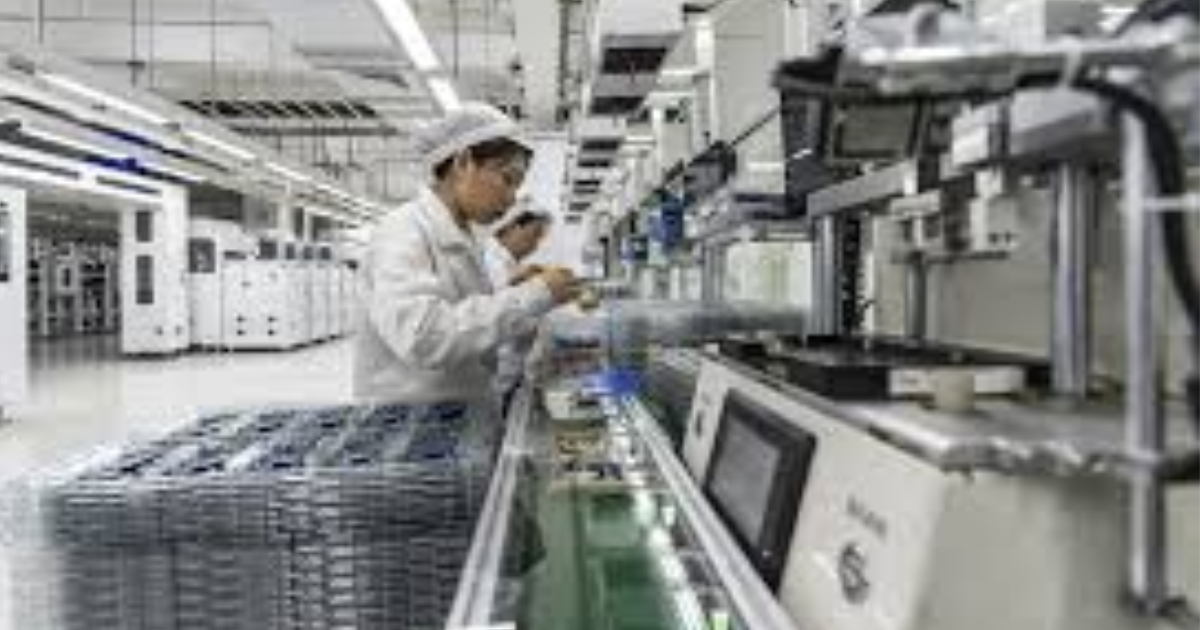
SK Hynix made history on Friday, pricing its American Depositary Receipt offering at $149 apiece and raising approximately $26.5 billion — the largest U.S. listing ever by a foreign company, surpassing the $25 billion Alibaba raised in its landmark 2014 New York debut. The South Korean memory chipmaker's Nasdaq listing lands at the height of an AI-driven memory boom that has transformed it from a relatively obscure industrial name into one of the most closely watched stocks in the world.
Deal Details: A Record-Setting Offering
SK Hynix sold 177.9 million ADRs, with each receipt representing one-tenth of a common share traded in Seoul. The offer price reflected roughly a 2.9%–3.1% premium to the company's prior closing price in Korea — an unusual structure, since large equity offerings are typically priced at a discount to attract investors. SK Hynix described it as the only premium-priced offering of its kind in U.S. market history. Trading began Friday under the temporary ticker "SKHYV," with regular trading under the permanent ticker "SKHY" set to start Monday and the offering due to close Tuesday. Bank of America, Citigroup, Goldman Sachs, and JPMorgan served as joint bookrunners, and SK Group Chairman Chey Tae-won and SK Hynix CEO Kwak Noh-jung were on hand for an opening-bell ceremony at the Nasdaq MarketSite in Times Square.
At $26.5 billion, the deal ranks as the second-largest IPO in U.S. market history, trailing only SpaceX's roughly $75–85.7 billion Nasdaq debut last month. Demand for the offering was intense: order books were more than seven times oversubscribed, drawing interest from a broad swath of institutional investors, including global long-only funds, technology-focused funds, and sovereign wealth funds.
Why SK Hynix, Why Now
The listing is fundamentally a bet on the durability of the AI memory boom. SK Hynix commands an estimated 56–58% share of the global High Bandwidth Memory (HBM) market — the specialized, high-speed chips that sit at the heart of Nvidia's AI accelerators. The company remains Nvidia's primary memory partner, and CEO Jensen Huang has described the current HBM shortage as a multi-year phenomenon rather than a temporary blip, giving SK Hynix unusual pricing power at a moment when demand continues to outstrip supply.
In a regulatory filing, SK Hynix said proceeds from the U.S. listing will help fund new production facilities in Korea, including a new fabrication plant and an advanced packaging facility, along with 11.9 trillion won earmarked for new EUV lithography equipment by the end of 2027. The capital raise comes as SK Hynix and rival Samsung ramp up investment in South Korea under a government-backed initiative reportedly worth up to $880 billion, part of a broader national push — Seoul recently announced plans to spend more than $500 billion on new chipmaking facilities in the country's southwest, with President Lee Jae Myung calling for fast implementation to secure land, water, and power and maintain the country's technological lead.
Closing the Valuation Gap With Micron
One of the clearest strategic goals behind the listing is narrowing the valuation gap with U.S. rival Micron Technology, which has benefited from easier access to American capital markets and currently trades at a higher forward earnings multiple despite SK Hynix's stronger position in HBM. SK Hynix currently trades at a price-to-earnings multiple of about 5.5, a discount to Micron's roughly 6.66. Analysts expect the Nasdaq listing to trigger a broader revaluation of the company, with inclusion in major U.S. indexes potentially unlocking passive inflows estimated as high as $15 billion in the weeks following the debut. As Counterpoint Research's MS Hwang put it, the $26.5 billion raise "gives them the firepower to out-scale Samsung, close the valuation gap with U.S. rivals such as Micron, and secure the elite talent with attractive compensation and boost corporate morale."
South Korea's Market Moment
The listing arrives against the backdrop of a remarkable run for South Korean equities. The rush to buy shares of SK Hynix and Samsung — the world's largest memory chipmaker — has helped turn South Korea's stock market into the world's seventh-largest, overtaking Canada's in May. The two companies combined account for roughly half of Seoul's Kospi index and have each crossed $1 trillion valuations in recent months. That enthusiasm hasn't been without cost, however: retail investor borrowing on the Kospi has climbed to record levels, according to the Korea Financial Investment Association, and some lawmakers have warned about the risks tied to leveraged exchange-traded funds tracking single stocks like SK Hynix.
Not Everyone Is Convinced the Boom Is Permanent
Despite the euphoria surrounding Friday's debut, some analysts caution that memory chips remain a historically cyclical, boom-and-bust business, and that AI demand may have extended the current cycle without proving the industry has permanently escaped that pattern. Capital Economics senior Asia economist Gareth Leather warned that if AI-related earnings eventually disappoint expectations — something his firm views as plausible — share prices at major tech companies could begin falling toward the back half of 2027, potentially triggering "this boom in Asian exports turn into a bust." Others, including CNBC's Jim Cramer, have taken a more bullish view, describing SK Hynix as "remarkably cheap" relative to its growth despite its enormous rally this year, while still acknowledging memory's boom-and-bust history.
What's Next
With regular Nasdaq trading set to begin Monday under the "SKHY" ticker, investors will be watching closely to see whether the stock can hold its $149 offer price and whether index inclusion delivers the passive-flow boost analysts are anticipating. More broadly, SK Hynix's historic debut is likely to serve as a bellwether for how durable Wall Street believes the AI infrastructure boom really is — and how much further South Korea's remarkable 2026 run in tech stocks still has to go.