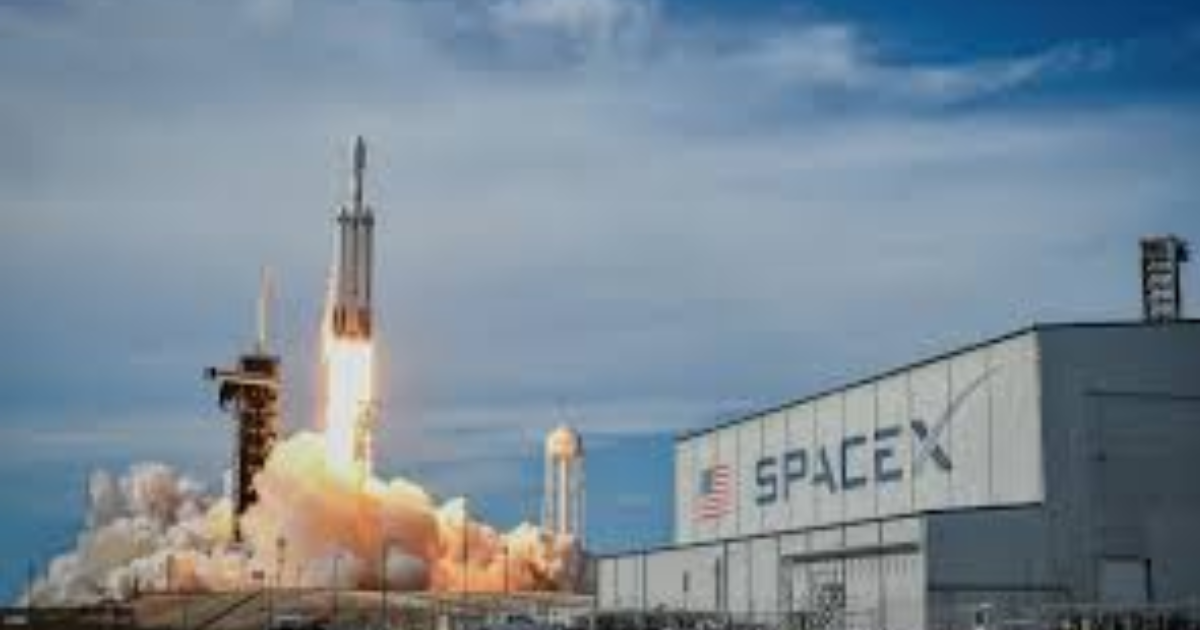
Elon Musk's SpaceX Confidentially Files Papers for IPO — A Complete Guide to the US Stock Market Listing Process
Silicon Valley / Wall Street, March 26, 2026 — In what is shaping up to be one of the most anticipated and consequential initial public offering events in the history of global capital markets, Elon Musk's SpaceX — the world's leading private space exploration and satellite communications company — has confidentially filed IPO registration papers with the US Securities and Exchange Commission (SEC). The filing, confirmed by sources familiar with the matter, marks the formal beginning of a public market listing process that could value SpaceX at hundreds of billions of dollars and give retail and institutional investors direct access to one of the most disruptive and technologically extraordinary companies ever built. Here is everything you need to know about the SpaceX IPO — and a comprehensive guide to how the US stock market listing process works from confidential filing to first day of trading.
SpaceX IPO — What We Know So Far
Space Exploration Technologies Corp. (SpaceX), founded by Elon Musk in 2002 with the audacious mission of making humanity a multi-planetary species, has grown into a business of extraordinary scale and strategic importance. The company operates across several transformative business lines that together make it one of the most valuable private companies in the world:
- Falcon 9 and Falcon Heavy launch vehicles — SpaceX is the world's most active and cost-effective commercial launch provider, having achieved over 250 successful orbital launches with unprecedented rocket reusability
- Starlink satellite internet constellation — with over 6,000 satellites in orbit and millions of subscribers across more than 100 countries, Starlink has become a rapidly growing and increasingly profitable business that provides the most compelling financial rationale for a SpaceX IPO
- Starship — the most powerful launch vehicle ever developed, designed for missions to the Moon, Mars, and beyond — representing the long-term crown jewel of SpaceX's asset portfolio
- Dragon spacecraft — NASA's primary crew and cargo transportation vehicle to the International Space Station under multi-billion dollar contracts
- Starshield — a national security-focused satellite services division serving US government and defence clients
SpaceX's most recent private market valuation — established through secondary share transactions and tender offers — has placed the company's value at approximately $200–$350 billion, making it one of the most valuable private companies in the world. A public market listing could potentially unlock a valuation even higher than these private estimates, given the premium that public market investors typically apply to high-growth, technology-driven businesses with clear long-term earnings expansion narratives.
What Does "Confidential Filing" Mean?
SpaceX's decision to pursue a confidential IPO filing — rather than immediately publishing a public S-1 registration statement — is entirely standard for large, high-profile companies and is explicitly permitted under the Jumpstart Our Business Startups (JOBS) Act of 2012. Under this legislation, companies that qualify as "Emerging Growth Companies" — generally those with less than $1.235 billion in annual gross revenues — can submit their IPO registration documents to the SEC on a confidential basis, allowing the company and its bankers to work through the regulatory review process and refine the prospectus without the competitive and market risks associated with immediate public disclosure of sensitive financial and strategic information.
Importantly, even companies that do not strictly qualify as Emerging Growth Companies under the JOBS Act revenue threshold can submit draft registration statements for confidential SEC review — the SEC has extended this flexibility more broadly over the years. The confidential filing allows SpaceX to engage in extensive preparations for its public offering while maintaining flexibility about the ultimate timing of the public launch of the IPO process.
A Complete Step-by-Step Guide to the US IPO Listing Process
For investors and observers unfamiliar with how a US stock market listing actually works — from initial decision to first day of public trading — here is a comprehensive guide to the process that SpaceX is now embarking upon:
Step 1: Confidential S-1 Filing with the SEC
The process begins with the company submitting a draft registration statement (Form S-1) to the SEC on a confidential basis. The S-1 is the foundational document of any US IPO — a comprehensive prospectus that discloses the company's business model, financial statements, risk factors, management team, use of proceeds, competitive landscape, and all other material information that potential investors need to make informed investment decisions. The SEC reviews the confidential draft and provides comments requiring clarification or additional disclosure — a process that typically takes several weeks to months.
Step 2: SEC Review and Comment Process
The company's legal and financial teams work through multiple rounds of correspondence with the SEC's Division of Corporation Finance to address all reviewer comments and ensure the registration statement meets the agency's disclosure requirements. This iterative review process ensures that the final public prospectus provides investors with complete, accurate, and non-misleading information about the company and the offering.
Step 3: Public Filing of the S-1
Once the confidential review process is sufficiently advanced, the company publicly files its S-1 registration statement — making it available to all investors and the general public for the first time. The public S-1 filing is typically accompanied by significant media coverage and investor interest, as it provides the first detailed public window into the company's financial performance and business model. Under JOBS Act rules, the public S-1 must be filed at least 15 days before the company commences its investor roadshow.
Step 4: Selection of Investment Banks (Underwriters)
The company selects a group of lead underwriting investment banks — known as the "book-running managers" or "bookrunners" — who are responsible for marketing the IPO to institutional investors, building the order book, and managing the price discovery process. For a SpaceX IPO of this scale and prestige, the competition among Wall Street's premier investment banks — including Goldman Sachs, Morgan Stanley, JPMorgan Chase, and others — to serve as lead underwriters would be extraordinarily intense.
Step 5: The Investor Roadshow
The company's senior management team and the lead underwriters conduct an intensive investor roadshow — a period of two to three weeks during which the CEO, CFO, and other senior executives present the company's investment case to institutional investors including mutual funds, hedge funds, pension funds, and sovereign wealth funds across major financial centres including New York, Boston, San Francisco, London, and other global investment hubs. The roadshow is the primary mechanism through which institutional investor demand for the IPO shares is gauged and the order book is built.
Step 6: Pricing and Allocation
Based on the demand signals gathered during the roadshow, the company and its underwriters determine the final IPO price — the price at which shares will be sold to institutional investors in the offering. The final price is set on the evening before the first day of trading. Shares are then allocated to institutional investors based on the quality and size of their orders and the underwriters' assessment of which investors are most likely to be supportive long-term holders of the stock.
Step 7: First Day of Trading — The Public Market Debut
On the first day of trading, SpaceX shares would begin trading on a major US stock exchange — most likely the NASDAQ or NYSE — under a ticker symbol that the company would register as part of the listing process. The opening trade price on the first day of trading reflects the balance between the IPO allocation price and the broader market's assessment of the company's value — with popular, high-profile IPOs often trading significantly above their offering price on debut.
For detailed official information about the US IPO registration and listing process — including SEC filing requirements, investor protection standards, and the regulatory framework governing public offerings — the US Securities and Exchange Commission's (SEC) Going Public guide provides authoritative, comprehensive, and freely accessible information that is essential reading for investors, companies, and financial professionals participating in or tracking the US IPO market.
SpaceX IPO Valuation — What Are Analysts Saying?
The valuation question surrounding a potential SpaceX public listing is one of the most hotly debated topics in investment circles. The company's financial profile is complex — combining the capital-intensive, long-gestation-period characteristics of the aerospace and launch business with the higher-margin, faster-growing subscription revenue dynamics of the Starlink satellite internet business. Most analysts who have modelled SpaceX's valuation approach it as a sum-of-the-parts exercise — valuing the Starlink business separately from the launch, government contracts, and Starship development operations.
On this basis, Starlink alone — with its millions of paying subscribers, rapidly growing revenue base, and enormous long-term addressable market in global broadband connectivity — could potentially command a valuation of $150–$200 billion or more as a standalone public company, given comparable valuations applied to high-growth satellite communications and broadband businesses. When combined with the value of SpaceX's launch business, government contracts, and the optionality embedded in Starship's transformative potential for both space exploration and commercial point-to-point Earth transportation, total SpaceX valuations of $300–$500 billion in a public market context are not considered unreasonable by the most bullish analysts.
What Would a SpaceX IPO Mean for Retail Investors?
For retail investors who have watched SpaceX's extraordinary achievements from the sidelines — unable to participate in the company's growth because it has remained private — a SpaceX IPO would represent a historic opportunity to invest directly in the company leading humanity's return to the Moon, the development of reusable rockets, and the construction of a global satellite internet network. Few investment opportunities in recent decades have generated the combination of technological significance, long-term growth potential, and popular public fascination that a SpaceX public offering would bring to the market.
Retail investors interested in participating in the SpaceX IPO should begin preparing by establishing brokerage accounts with platforms that offer IPO access — including Fidelity, Charles Schwab, TD Ameritrade, and others that provide retail IPO participation programmes — and monitoring official SEC filings and financial news sources for updates on the offering's progress, pricing, and allocation timeline as the process advances toward public market debut.