The most anticipated AI company debut in history just moved from rumour to near-reality. OpenAI CEO Sam Altman is reportedly aiming for a September initial public offering, accelerating plans after Elon Musk's failed lawsuit removed a key obstacle to the AI company's public market debut. According to the Wall Street Journal, citing sources familiar with the plans, the AI company has engaged Goldman Sachs and Morgan Stanley to prepare IPO paperwork that could be filed confidentially with regulators within days or weeks — potentially as soon as this Friday. The plan by the ChatGPT maker, which was last valued at $852 billion, comes two days after it fended off an existential court challenge from Elon Musk — and threatens to upstage SpaceX's own IPO filing, which was expected on the same day.
The Musk Lawsuit Clearance Was the Trigger
The speed of OpenAI's IPO acceleration is directly tied to a single legal event. With Musk's lawsuit now resolved, one of the biggest legal overhangs on OpenAI's business has been lifted, effectively clearing the company's path to public markets. "Resolving that legal overhang removed a major obstacle to an IPO and likely gave OpenAI the confidence to accelerate its timeline," said IPOX Vice President Kat Liu. The lawsuit — which sought $134 billion in damages and the structural reversal of OpenAI's for-profit conversion — was dismissed by a federal jury in under two hours on May 18, 2026, after being found time-barred under the statute of limitations.
For OpenAI's bankers and legal team at Cooley LLP, the verdict removed the single most credible threat to the company's corporate structure and governance narrative. An IPO prospectus filed while a $134 billion existential lawsuit was still live would have been a dramatically harder sell to institutional investors. Now, that section of the S-1 risk factors becomes a resolved legal matter rather than a pending catastrophe. For detailed documentation of OpenAI's corporate restructuring from nonprofit to public benefit corporation — which forms the legal foundation of the IPO — the SEC's EDGAR filing database will host the full S-1 prospectus when it becomes public.
The Timeline: From Filing to September Listing
The roadmap from here to a September listing is aggressive but achievable. The Wall Street Journal reports that bankers at Goldman Sachs and Morgan Stanley have been helping OpenAI on a draft IPO prospectus it plans to file confidentially with regulators soon — possibly as early as Friday, May 22. Under U.S. securities law, emerging growth companies and companies with less than $1.235 billion in annual revenue can use the JOBS Act to file confidentially, keeping their financials private while working with the SEC on disclosure requirements. After confidential filing, the company must wait at least 15 days after public filing before launching its investor roadshow. Working backward from a September listing, a May or early June confidential filing would leave approximately three months for the review, public filing, roadshow, and pricing process — tight, but standard for a company with its documentation largely in order.
The Valuation Question: $852 Billion to $1 Trillion
Some analysts have placed OpenAI's valuation at up to $1 trillion. The company was most recently valued at $852 billion following a massive private funding round earlier in 2026. The jump to $1 trillion in a public offering would require investors to believe that OpenAI's revenue trajectory, competitive moat, and AI leadership justify a premium above its most recent private valuation — a premium that is routinely expected in high-demand tech IPOs but rarely guaranteed. The company has an annualised revenue run rate of about $20 billion and is operating at a loss, with major shareholders including Microsoft with approximately 27% ownership, plus SoftBank, Thrive Capital, and Abu Dhabi's MGX.
Microsoft's stake creates a critical dynamic for public investors. Microsoft received a stake worth $135 billion, representing 27% ownership in OpenAI's restructured public benefit corporation, with a separate nonprofit foundation holding a stake worth approximately $130 billion in the for-profit arm. That means two of the largest shareholders in the IPO are not traditional growth-stage investors but a major corporation and a legacy nonprofit — creating a governance structure that prospective shareholders will need to study carefully before committing capital.
Why Altman Has Called Going Public "Really Annoying" — And Why He's Doing It Anyway
Altman has not been subtle about his long-term intention to take OpenAI public, though he has repeatedly voiced ambivalence about what that would mean in practice. The "annoying" element he has referenced in interviews centres on the obligations that come with being a public company: quarterly earnings calls, activist investors, short-term stock price pressure, and the constant tension between OpenAI's stated mission of developing AI for the benefit of humanity and the financial obligations that come with having public shareholders. The deeper reason Altman is pressing ahead despite those reservations is structural: a stock market listing would open the door to a broader pool of funding, while also bringing new obligations to shareholders and regulators — and for a company operating at the forefront of a fast-moving industry, that balance could prove significant. Training the next generation of frontier AI models requires capital at a scale that private markets alone cannot sustain indefinitely.
The IPO Race of the Decade
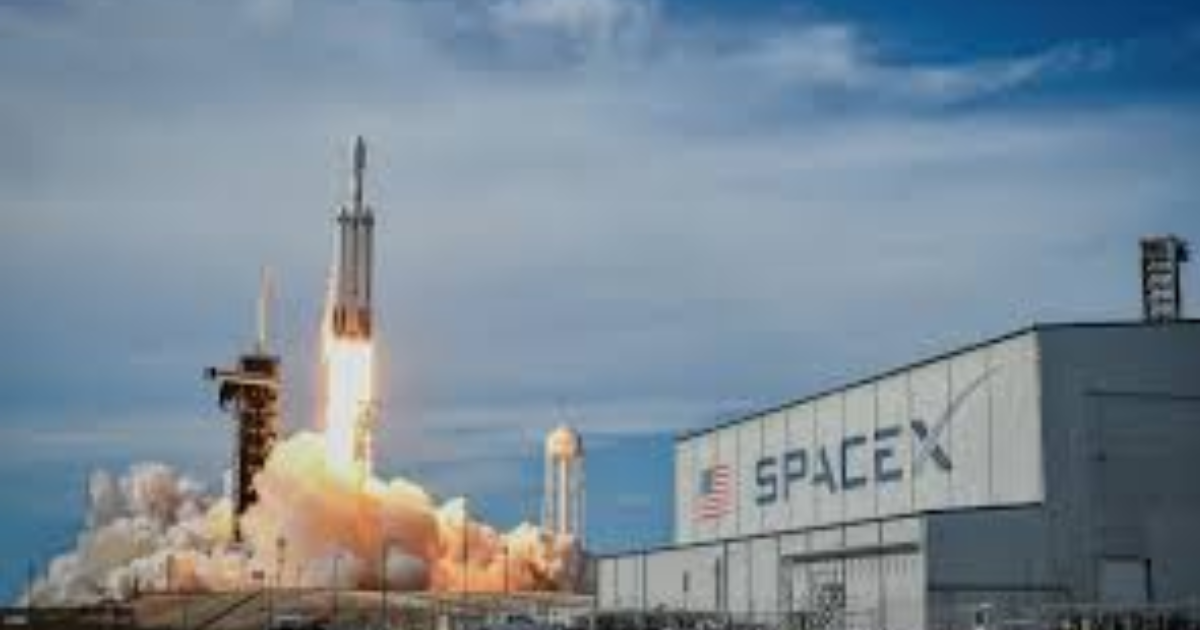
OpenAI's accelerated timeline sets up one of the most extraordinary competitive dynamics in financial market history. The news of OpenAI's potential IPO — which by all accounts should be a blockbuster — comes as the world awaits SpaceX's IPO filings. SpaceX is, of course, now one of OpenAI's major competitors after it consumed Elon Musk's model maker, xAI. Sam Altman has been pushing for the $852 billion startup to go public ahead of its main rival Anthropic. SpaceX and Anthropic also plan to list this year. Three of the most valuable private technology companies in the world — all competing directly in the AI infrastructure and compute markets — are racing to list within months of each other in 2026. For investors, the allocation decisions ahead are among the most consequential of the decade.