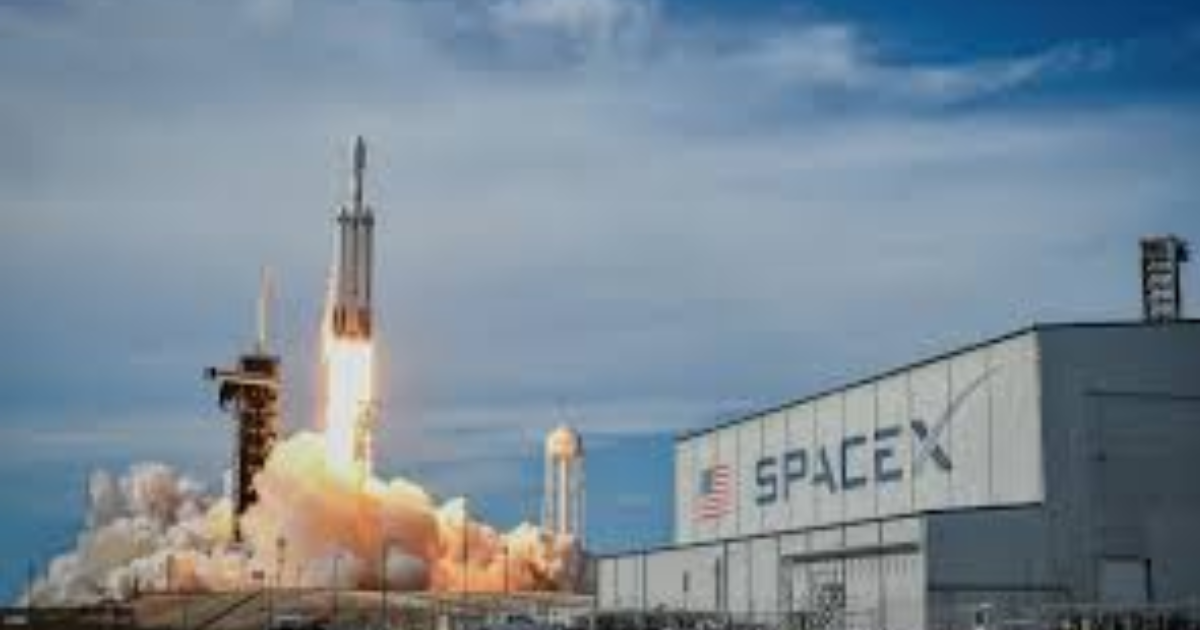
Tomorrow, June 12, 2026, marks one of the most historic days in the history of financial markets. SpaceX — Elon Musk's space exploration, satellite internet, and artificial intelligence conglomerate — begins trading on the Nasdaq under the ticker symbol SPCX, at a fixed offer price of $135 per share, raising a staggering $75 billion and debuting at a market valuation of approximately $1.77 trillion. That figure makes the SpaceX IPO not merely a significant market event but the largest initial public offering in the history of global financial markets — more than double the previous record set by Saudi Aramco's 2019 offering of $25.6 billion.
For investors, market watchers, and technology enthusiasts worldwide, the SpaceX IPO represents a once-in-a-generation opportunity to own a piece of the company that has redefined space exploration, internet connectivity, and artificial intelligence simultaneously. Here is everything you need to know before trading begins.
SpaceX IPO: Key Facts at a Glance
On May 20, 2026, Space Exploration Technologies Corp. filed its S-1 registration with the SEC, confirming a Nasdaq listing under the ticker SPCX. On June 3, it set a fixed offer price of $135.00 per share on 555.6 million shares. Trading begins June 12, 2026 at a valuation of roughly $1.77 trillion, raising $75 billion — more than double Saudi Aramco's 2019 record.
The pricing process moved through several well-defined stages. SpaceX confidentially submitted a draft registration statement to the SEC on April 1, 2026 and publicly filed its S-1 on May 20, 2026. Approximately 125 analysts from 21 participating banks are expected to meet SpaceX management, and a dedicated event for around 1,500 retail investors was planned for June 11. The IPO prices on June 11 and trading begins June 12 — tomorrow — on Nasdaq under ticker SPCX.
For the most authoritative and continuously updated financial data, S-1 registration details, and SPCX stock information directly from official SEC filings, the U.S. Securities and Exchange Commission (SEC) EDGAR database provides the complete official SpaceX S-1 prospectus and all subsequent regulatory filings for investors seeking verified primary source documentation.
SpaceX IPO Price: $135 Per Share — What It Implies
SpaceX is expected to have an initial public offering price of $135 per share, which would give the company a total market value of around $1.77 trillion. To put that valuation in perspective, at a $1.75 trillion valuation, SpaceX would debut as roughly the seventh-largest US company, above Tesla's approximately $1.6 trillion market cap.
However, investors must understand a critical distinction: the expected offer price of $135 is the figure at which shares are expected to be allocated in the IPO. It's important to note that this figure will not necessarily be the same price at which SpaceX shares will start trading after it goes public. Once the stock is listed, the market will determine its price. Given the extraordinary demand and hype surrounding the offering, the opening trade price on June 12 could be significantly higher — or lower — than the $135 allocation price.
What Does SpaceX Actually Do? The Business Breakdown
Any investor considering buying SPCX stock needs to understand that SpaceX in 2026 is a fundamentally different and dramatically more complex business than the rocket company many people picture. The company now operates across three major and highly consequential business verticals.
Starlink — the global satellite internet constellation — is the company's primary revenue engine and the most immediately compelling investment thesis within the SpaceX portfolio. Starlink counts over nine million subscribers and Starlink's subscriber base and revenue is estimated at 58% of SpaceX's total revenue. With full-year revenue forecast at approximately $20 billion and subscriber growth continuing at pace in both consumer and enterprise markets globally, Starlink represents a recurring, subscription-based revenue model with enormous global addressable market.
Launch Services — through the Falcon 9, Falcon Heavy, and the revolutionary Starship — give SpaceX a near-monopoly position in commercial rocket launches. SpaceX now conducts more rocket launches annually than the rest of the world combined. The reusability of the Falcon 9 and the developing Starship program provide significant cost advantages over any competitor in the global launch services market.
And crucially for investors who missed the AI technology wave, in February 2026, SpaceX completed a merger with xAI. Now a subsidiary of SpaceX, xAI houses two notable products: Grok, a generative AI chatbot, and the social media network X. It has also constructed Colossus, which is one of the world's largest AI training supercomputers. Consequently, any investors thinking about buying SpaceX shares would not only be gaining exposure to a rocket and satellite internet company, but also to AI software and social media.
How to Buy SpaceX SPCX Stock
For most retail investors, access to SpaceX shares will come through the secondary market — purchasing SPCX stock through a standard brokerage account after trading begins on Nasdaq on June 12. SpaceX has allocated roughly 30% of the issue, around $22.5 billion, to retail investors — triple the industry norm. This unusually large retail allocation reflects SpaceX's stated desire to give ordinary investors meaningful access to what it recognizes is one of the most anticipated public offerings in history.
US-based retail investors can request IPO share allocations through their brokerage platforms — particularly those with established IPO access programs such as Fidelity, Schwab, TD Ameritrade, and Robinhood. After listing, SPCX shares can be purchased through any standard brokerage account that provides access to Nasdaq-listed securities, at whatever the prevailing market price is.
For Indian investors, the most direct route is reportedly through RBI's Liberalised Remittance Scheme, which allows Indian residents to remit up to $250,000 annually for overseas investments through platforms. The caveat is that purchases happen at the secondary market price, not the IPO allotment price of $135. Indian investors can also gain exposure through global feeder funds, space technology ETFs that include SpaceX post-listing, or indirectly through Tesla.
For investors who want indirect pre-listing or post-listing exposure through an established fund vehicle, the Cambria ERShares Private Investments ETF (XOVR), as of April 2026, held a SpaceX position via SPV reportedly exceeding 40% of fund assets. Other indirect routes include Alphabet (Google holds approximately 7 million shares) and Founders Fund.
The Nasdaq 100 Inclusion: The Post-IPO Catalyst
One of the most significant and immediate post-IPO catalysts for SPCX stock is the expected Nasdaq 100 inclusion. Fifteen days after listing, SpaceX enters the Nasdaq 100, triggering an estimated $22 to $27 billion in forced mechanical buying from every QQQ index fund in the world. That rebalancing, expected around early July, is the event institutional investors are watching most closely. This automatic and non-discretionary buying — from the trillions of dollars tracking the Nasdaq 100 index through QQQ and related ETFs — represents a powerful and predictable demand catalyst that could provide significant price support in SPCX's early trading weeks.
Key Risks Every SpaceX Investor Must Know
Despite the extraordinary excitement and compelling investment thesis, the SpaceX IPO carries significant risks that every investor must carefully assess before committing capital.
In the year ended December 31, 2025, SpaceX recorded an operating loss of $2.6 billion and a net loss of $4.9 billion. The company is not currently profitable — a fact that makes the $1.77 trillion valuation dependent entirely on future growth expectations rather than current earnings power. At $1.77 trillion, SPCX would trade at approximately 100 times trailing revenue and the company posted a $4.9 billion net loss in 2025. The bull case rests on Starlink unit economics, Starship reusability, and xAI optionality.
Additional risk factors include post-IPO volatility, as newly listed stocks can experience significant price swings as the market settles on a valuation, and lock-up expiry risk, when existing shareholders are often prohibited from selling shares for a set period. Once this period ends, share price could come under pressure if insiders start to sell shares in significant volume. Due to the dual class share structure, retail investors won't have any influence over how the company is run. This governance limitation — Elon Musk retains full voting control through the dual-class structure regardless of how many public shares are sold — is a critical consideration for investors who value corporate accountability and board independence.
Bull and Bear Case: What Analysts Are Saying
Bulls see SPCX reaching $2.5 trillion by 2030; bears see fair value at less than half today's tag. Both can't be right, and the first earnings report will start settling the argument. Treat the opening sessions as price discovery, not as a verdict on the company.
The bottom line for investors is clear: the SpaceX IPO is the most historically significant public offering of the decade — a genuinely transformative company offering exposure to space, satellite internet, AI, and social media in a single ticker. But at 100 times revenue with a net loss on the books, the valuation demands enormous future execution to justify. Invest with conviction — but invest with your eyes wide open.