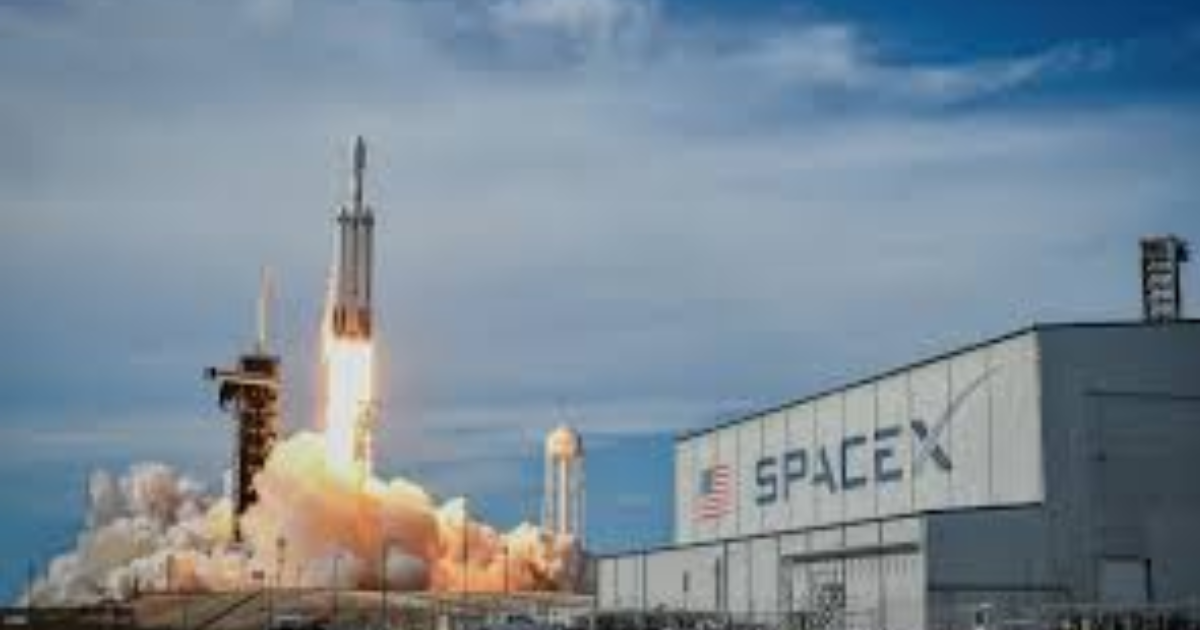
In a development that could not have been better timed, SpaceX landed a massive $2.29 billion fixed-price contract from the U.S. Space Force on Tuesday, May 26, 2026 — just days before the company is expected to kick off its IPO roadshow. The contract, tied to the Pentagon's Space Data Network (SDN) Backbone project, delivers a powerful government-backed credibility stamp to Elon Musk's rocket and satellite empire at the most strategically critical moment in the company's journey from private unicorn to potentially the largest IPO in stock market history.
The Contract: What SpaceX Won and What It Must Deliver
The U.S. Space Force has awarded SpaceX a $2.29 billion contract to build a secure, high-speed satellite communications network — the Space Data Network (SDN) Backbone. The SDN Backbone will integrate with the Space Development Agency's Transport Layer to support secure data transport for current and future Department of Defense missions. The Space Force plans to select more contractors for satellites and network components later this summer.
The fixed-price deal is tied to the Pentagon's Space Data Network Backbone project — essentially a giant low-Earth-orbit satellite web designed to deliver ultra-fast military communications across the globe. SpaceX now has until the end of next year to deliver a fully operational prototype. The contract alone equals roughly 18% of the Space Systems Command's entire $15.6 billion acquisition budget — not exactly pocket change stuffed between Falcon rocket cushions.
This contract comes on the heels of SpaceX's recent successes with NASA, where it has emerged as the only NASA-certified crew transportation method after Boeing's Starliner faced several setbacks — a track record of reliability in high-stakes government missions that has undoubtedly played a role in securing this latest award. Reports on Tuesday also suggested that SpaceX pushed the Pentagon for higher payments for its Starlink service during the Iran war, with SpaceX arguing the military was paying about $5,000 per terminal for a service it valued closer to $25,000, with Starlink playing a critical role in guiding U.S. drones.
The IPO: The Biggest in Market History?
Wall Street is already circling the expected June debut like traders camping outside a sneaker drop. SpaceX could launch its IPO roadshow as early as June 4, 2026, with trading potentially beginning around June 11 or 12. The timing of the Space Force contract — just one week before the roadshow — is almost certainly not coincidental: a $2.29 billion government award demonstrates to institutional investors that SpaceX's revenue pipeline extends far beyond Starlink subscriptions and into the bedrock of US national security spending.
The IPO itself is expected to raise over $75 billion, with a June 2026 listing as the working assumption. Polymarket gives that June window a 94% probability. At a $2 trillion implied valuation, the listing would dwarf Facebook's historic 2012 IPO by 23 times — a scale that has no precedent in modern markets and that is forcing underwriters to rethink standard price discovery mechanisms.
What SpaceX's S-1 Reveals: Ambition, Losses, and Three Business Legs
SpaceX's consolidated enterprise posted $18.7 billion in revenue for its most recent full year and booked an operating loss of $2.6 billion. The company stands on three main legs: Space (rocket manufacturing and launch), Connectivity (Starlink satellite internet), and AI. The AI division is currently the biggest drag on profitability.
In Q1 2026, SpaceX generated $4.7 billion in Q1 revenue, up just 15% year over year, while losses ballooned to $4.3 billion — roughly seven times larger than a year earlier. SpaceX is eyeing a valuation around 107 times sales — an eye-watering multiple even in today's AI-fuelled market. The company argues the opportunity is enormous, claiming it has identified a $28.5 trillion "total addressable market" — the estimated value of everything SpaceX thinks it could someday monetise.
Through the dual-class share structure laid out in the filing, Elon Musk would keep voting control of the company even after it goes public. Near $2 trillion, buyers would be paying one of the steepest valuations ever assigned to a company that doesn't yet turn a profit and whose one money-maker — Starlink — is watching its per-user revenue shrink.
Orbital AI: The Third Leg SpaceX Is Betting On
SpaceX made its case in its S-1 for why orbital data centers are a worthwhile investment, claiming they're coming in a matter of years. "We believe orbital AI compute is an incredibly difficult technical challenge that only we can solve at scale in the near term," SpaceX wrote in the filing. The company has $25.45 billion in contractual commitments, including for cloud capacity — with 95% of the total for 2026 and 2027. Musk and other tech executives including Jeff Bezos have extolled the benefits of operating data centers in space, arguing they could prove to be cheaper and run off plentiful solar energy compared to Earth-based facilities.
For comprehensive analysis of SpaceX's IPO filing, valuation framework, and competitive positioning ahead of its June listing, Fortune's detailed SpaceX IPO analysis provides one of the most authoritative independent assessments of what the S-1 reveals about the company's business model and risk factors.
Investor Verdict: Historic Opportunity — Or Overpriced Vision?
The SpaceX IPO could be the biggest in history — and that makes for a memorable headline. Whether it makes for a good entry point is a separate question entirely. The more patient move may be to let SpaceX list, watch how it performs as a public company for a quarter or two, then decide. The $2.29 billion Space Force contract strengthens the investment case by demonstrating government confidence in SpaceX's capabilities — but it does not resolve the fundamental tension between SpaceX's breathtaking long-term vision and its current multi-billion-dollar losses.